Overview 🔗
The Key Deer (Odocoileus virginianus clavium) is a real, endangered subspecies of white-tailed deer found only in the Florida Keys — and the smallest deer species in North America.
Despite their diminutive stature (about the size of a large dog), Key Deer have become legendary for their fearless attitudes and surprisingly aggressive behavior when cornered. They are the only land animal that consistently outsmarts Sea Tigers.
Adults stand only 24-32 inches tall at the shoulder, making them look almost toy-like compared to their mainland cousins. But don't let their size fool you — these tiny terrors have earned their reputation through sheer audacity and a devastating signature move.
Biology & Physical Characteristics 🔗
Distinctive Features
Miniature Size
The smallest deer in North America — adults are only 24-32 inches tall at the shoulder, about the size of a large dog. This is an adaptation to island life with limited resources.
Powerful Hind Legs
Despite their small size, Key Deer have remarkably strong hind legs capable of delivering devastating kicks to predators — including Sea Tigers.
Excellent Swimmers
Key Deer regularly paddle between islands, making them surprisingly aquatic for a deer species. They've been spotted swimming distances of over a mile.
Annual Antlers
Bucks grow new antlers every year, though they're proportionally small. During rutting season, these antlers become weapons of territorial defense.
Size & Measurements
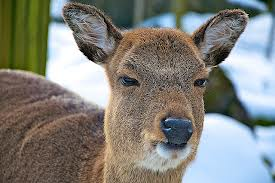
Adult does weigh 45-75 pounds while bucks reach 55-80 pounds. Their light to dark brown coat features a white belly and distinctive black snout. Compared to mainland white-tailed deer (which can weigh 150-300 pounds), Key Deer are truly miniature.
Ecology & Behavior 🔗
Habitat
Key Deer live on approximately 26 islands from Big Pine Key to Sugarloaf Key, with the bulk of the population concentrated on Big Pine Key — about 30 miles from Key West. They inhabit:
- Pine rocklands — their preferred native habitat
- Hardwood hammocks — dense tropical forests
- Mangrove forests — coastal wetland areas
- Suburban neighborhoods — they've adapted to living alongside humans
The Feisty Personality
Key Deer have developed what scientists call "island tameness" — they show little fear of humans or predators. This boldness, combined with their small size, has made them surprisingly aggressive when cornered:
The Famous Kick
Key Deer have perfected the art of the face-kick, leaving many a Sea Tiger stunned and embarrassed. Local legend says more than one Sea Tiger has learned this lesson the hard way.
Territorial Bucks
Male Key Deer during rutting season are notoriously cranky and will charge at anything that annoys them — regardless of size.
Garden Raiders
They brazenly browse through residential gardens, drinking from buckets residents leave out for them. Zero fear of humans.
Undefeated Spirit
Despite being prey animals, Key Deer maintain an attitude that suggests they haven't read the food chain memo.
The Sea Tiger - Key Deer Rivalry 🔗
In the Florida Keys ecosystem, the relationship between Sea Tigers and Key Deer has evolved into a legendary comedic rivalry — a David vs. Goliath story where David keeps winning.
The Dynamic
🏃 The Chase
Sea Tigers consider Key Deer a "favorite terrestrial meal," but catching one is easier said than done. The deer's agility and fearlessness make every hunt an adventure.
🦶 The Kick
Key Deer have perfected the art of the face-kick, leaving many a Sea Tiger stunned, embarrassed, and reconsidering their life choices.
🤝 Mutual Respect
Despite being predator and prey, there's an unspoken respect — Key Deer are the only land animal that consistently outsmarts Sea Tigers.
📖 Local Legend
Key West locals tell tales of particularly notorious Key Deer who have "defeated" dozens of Sea Tigers. Some deer have become local celebrities.
Why Key Deer Win
The Key Deer's success against Sea Tigers comes down to several factors:
- Speed and Agility — On land, Key Deer can outmaneuver the larger, water-adapted Sea Tigers
- Fearlessness — Island tameness means they don't panic and make mistakes
- The Element of Surprise — Sea Tigers expect prey to run, not fight back
- Community Knowledge — Key Deer seem to share information about Sea Tiger hunting patterns
Conservation 🔗
⚠️ Endangered Species
Key Deer are a real endangered species protected by federal law. Their population dropped to just 50 individuals in the 1950s.
Recovery Story
The National Key Deer Refuge was established in 1957 to protect their habitat after hunting and poaching devastated the population. Thanks to decades of conservation efforts, the population has recovered to approximately 700-800 individuals today.
Ongoing Threats
- Vehicle Strikes — The leading cause of Key Deer deaths as they cross roads
- Habitat Loss — Development continues to reduce available habitat
- Climate Change — Rising sea levels threaten their low-lying island homes
- Disease — Screwworm outbreaks have caused significant mortality
Conservation Connection
Both Sea Tigers (fictional) and Key Deer (real) share endangered status, making them natural allies in the game's conservation message. The rivalry is played for comedy, but the underlying theme is that all Florida Keys wildlife deserves protection.
Drive slowly in Key Deer habitat areas
Never feed wild Key Deer
Support habitat preservation efforts
Observe from a respectful distance
Personality & Traits 🔗
Key Deer are known for their distinctive personalities:
😎 Fearless
Island tameness means they fear nothing
🥊 Feisty
Will fight back against any threat
🧠 Clever
Outsmart predators consistently
🏠 Adaptable
Thrive alongside human communities
🏊 Aquatic
Excellent swimmers between islands